As the second quarter came to its end, high school seniors who were in the College Government class worked hard on their final project: The Civic Action Capstone Project.
The main goal of the Capstone Project is to solve a problem or address an issue in the community that affects you, neighbors, and others. Students focus on the issue and gather more information about who it affects and where the effects are felt. They have to research and find a reason why this focus issue exists.
They are meant to apply News Literacy skills and knowledge of the U.S. Government to research, solve, and develop solutions. Students are asked to address the issue by advocating for a goal that is effective in creating long-term change.
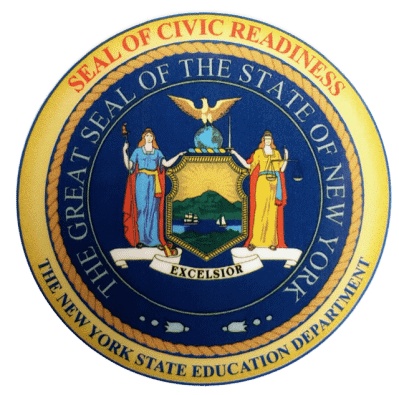
By completing this project students are one step closer to obtaining the New York State Seal of Civic Readiness. To obtain it not only they have to complete this project, but according to the New York State Education Department they must also “complete all requirements for a New York State local or Regents diploma and earn a total of six points with at least two points in Civic Knowledge and at least two points in Civic Participation.”
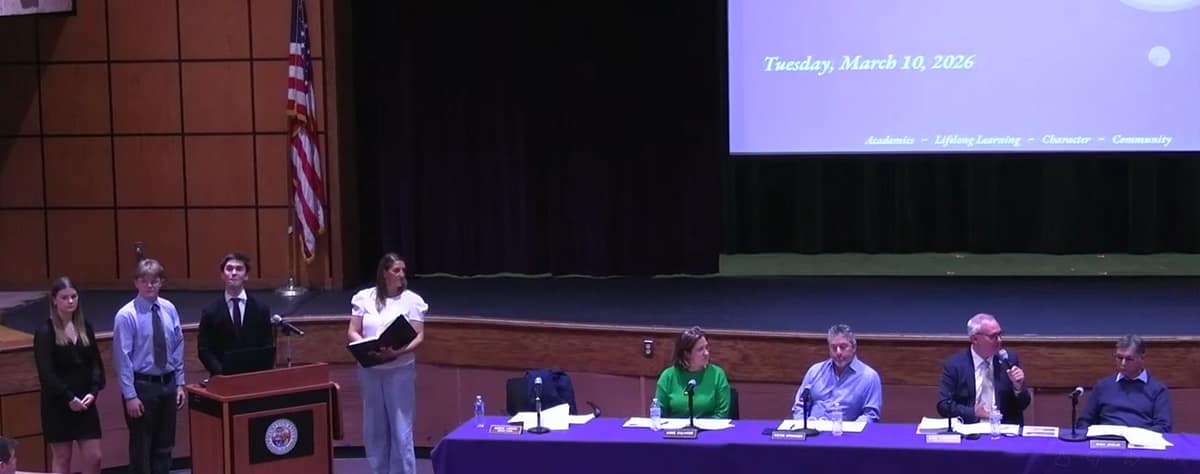
Mary Rose Arabejo, William Hurtle, Katherin Puglla, Sean Loetscher, and Lauren Capone shared what civic issue they focused on. Capone said, “Our civic issue was focused on food inaccessibility within Hampton Bays. We realized that community access to food is not very feasible due to expensive prices around Hampton Bays and the surrounding areas.” She also added that this issue is important because it is so bizarre that a carton of eggs can be so expensive.
She continued to explain, “Our solution to address food inaccessibility was to build plots in our school garden that are designated to growing fresh produce. We would then have a volunteer or member of the Garden Club harvest the produce and put them out in baskets in a public place for people to grab. We were unable to initiate any funding or build as of yet due to limited time, however we have the design plan down for someone in the near future to actually use and initiate building.”
Arabejo added that it makes her feel better about making a sort of change or pitching an idea out there and that there is a rewarding feeling about it.
Other students like Caitlyn Lupia, Leah Russell, and Mackenzie Wilson shared what issue topic they focused on. Lupia said, “We explored the ways negative body image impact students attending Hampton Bays High School.” She added that this issue is important to her because she sees many students struggle with their own body image.
To resolve this issue, they decided to make a presentation, and they presented it in two of Mr. Davidson’s health classes to provide education about body image. This project made Lupia realize that small actions can make a huge difference.
Students Jacqueline Flores and Mariana Aguero focused their Civic Action Capstone Project on morning traffic at Hampton Bays High School, an issue they say affects not only students but also teachers, parents, and local pedestrians.
As part of their project, they contacted the school principal and officials from the Town of Southampton, conducted a student survey, and proposed solutions.
The students suggested two solutions for morning traffic at Hampton Bays High School. One was opening another entrance for students who line near Wakeman Road, but they said it wouldn’t work because of security. Instead, they focused on adding a crosswalk, since “many students leave their parents’ cars to avoid being late,” which can be unsafe when students run across the street.
Mrs. Kelsh, gave her opinion about this project and how it benefits students.
Students are meant to present their projects to Mrs. Kelsh, who teachers the College Government class, and Mrs. Fox, Director of Bilingual and Alternative Education, in order to receive credit. According the Mrs. Kelsh, “The benefits for students is that they feel like they are making a difference, have their voices heard, and are active citizens in society.” Mrs. Kelsh believes it is important for students to be engaged for several reasons. “We live in a democracy so it is important that their ideas are reflected in policy and decision-making.”